The cloud revolution promised cost efficiency and scalability, but for many Indian SMEs, AWS bills have become a monthly nightmare. What started as a $200 monthly expense has ballooned to $2,000+ without any significant increase in usage. Sound familiar?
You're not alone. A growing number of Indian businesses are making the switch to local cloud hosting providers, reporting cost savings between 30-50% while gaining better performance and support. But is this trend just about cutting costs, or are there deeper strategic advantages at play?
The Hidden Cost Trap of Global Hyperscalers
AWS and other global cloud providers operate on complex pricing models that can quickly spiral out of control. Here's what most Indian SMEs discover too late:
Egress and Bandwidth Costs Kill Your Budget
Every time your application serves content to Indian users, you're paying premium rates for data transfer from distant servers. AWS charges $0.09 per GB for the first 10TB of data transfer out to Asia Pacific regions. For a typical e-commerce site serving 1TB monthly, that's $90 just in bandwidth costs.

Currency Fluctuation Adds Unpredictability
When your bills arrive in USD, you're not just paying for cloud services: you're gambling on exchange rates. A 5% rupee depreciation can instantly increase your hosting costs without any change in usage.
Complex Billing Creates Cost Surprises
AWS billing includes hundreds of line items: EC2 instances, EBS storage, S3 requests, CloudFront distributions, Route 53 queries, and more. Most SMEs lack dedicated cloud architects to optimize these costs, leading to 60-70% of resources running idle.
Why Local Cloud Hosting Makes Sense for Indian Businesses
Predictable INR Pricing
Local providers offer transparent, rupee-based pricing with no currency conversion surprises. What you see is what you pay, month after month.
Zero Egress Fees for Indian Traffic
When your servers are located in Mumbai or Bengaluru, serving content to Delhi or Chennai users doesn't incur additional bandwidth charges. This alone can save ₹15,000-40,000 monthly for medium-traffic websites.
Faster Local Support
Try reaching AWS support at 2 AM IST with a critical server issue. Local providers offer phone support in regional languages and understand the Indian business context.
Data Residency Compliance
With increasing focus on data localization, keeping customer data within Indian borders isn't just good practice: it's becoming mandatory for many sectors.
Real Cost Breakdown: AWS vs Local Hosting
Let's examine a typical Indian SME scenario:
Medium E-commerce Site Requirements:
- 4 vCPU, 16GB RAM server
- 500GB SSD storage
- 2TB monthly bandwidth
- Managed database
- SSL certificate
- Daily backups
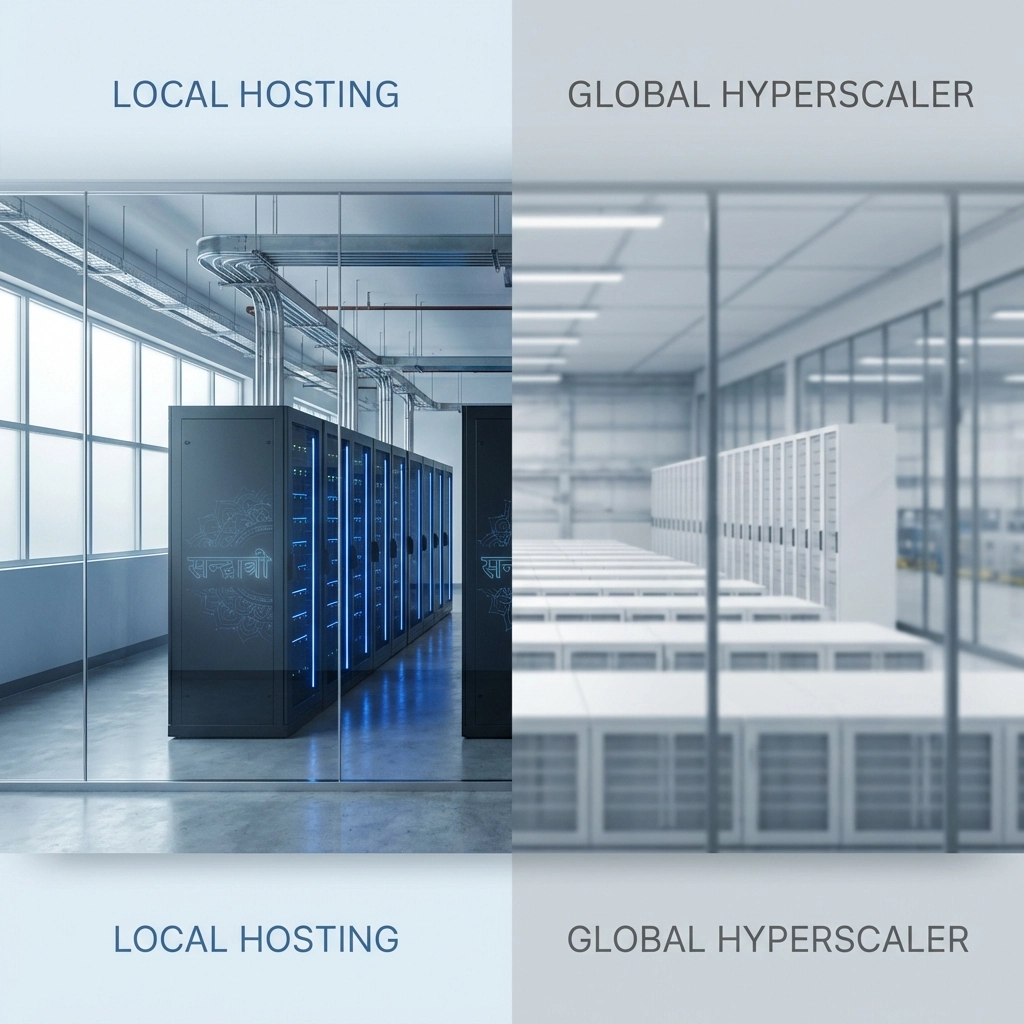
AWS Costs (Mumbai Region):
- EC2 t3.xlarge: $149.50/month
- EBS storage (500GB): $50/month
- RDS MySQL: $85/month
- Data transfer: $180/month
- Route 53: $25/month
- Total: $489.50 (~₹40,000/month)
Local Cloud Provider:
- Comparable VPS: ₹12,000/month
- Managed MySQL: ₹4,000/month
- Unlimited bandwidth: ₹0
- Free SSL & backups: ₹0
- Total: ₹16,000/month
Savings: ₹24,000 monthly (60%)
The Migration Checklist: Moving from AWS to Local Hosting
Phase 1: Assessment (Week 1)
- Audit current AWS usage and costs
- Identify data transfer patterns
- Document application dependencies
- Choose local hosting provider
Phase 2: Setup (Week 2-3)
- Configure new servers with local provider
- Set up development/staging environments
- Install applications and migrate databases
- Configure SSL and security measures
Phase 3: Testing (Week 4)
- Conduct thorough application testing
- Performance benchmarking
- Load testing with Indian user base
- Security vulnerability assessment
Phase 4: Go-Live (Week 5)
- DNS cutover during low-traffic hours
- Monitor application performance
- Gradually migrate traffic
- Decommission AWS resources

Common Migration Pitfalls to Avoid
Don't Rush the Database Migration
Database migration requires careful planning. Use tools like mysqldump with compression, and plan for downtime during the final sync.
Overlooking CDN Requirements
If you serve global users, you'll still need a CDN. However, for India-focused businesses, local hosting often eliminates this requirement.
Ignoring Monitoring Setup
Set up proper monitoring from day one. Local providers often include basic monitoring, but invest in comprehensive tools for production environments.
Underestimating Support Quality
Not all local providers offer enterprise-grade support. Research their SLA, response times, and technical expertise before committing.
When AWS Still Makes Sense
Local hosting isn't always the answer. Consider staying with AWS if:
- You need global edge locations for international users
- Your application requires specific AWS services (Lambda, SageMaker, etc.)
- You have enterprise compliance requirements beyond data residency
- Your team has deep AWS expertise and automation built around AWS APIs
The Bottom Line: Strategic vs Tactical Decisions
The shift from AWS to local hosting represents more than cost optimization: it's about building sustainable, predictable IT infrastructure aligned with Indian business needs. Companies making this transition report not just cost savings, but improved performance, better support relationships, and reduced complexity.
However, this decision shouldn't be purely financial. Consider your long-term growth plans, technical requirements, and team capabilities before making the switch.
Ready to Explore Local Cloud Hosting?
If you're spending more than ₹20,000 monthly on AWS and serving primarily Indian users, it's time to evaluate local alternatives. Our managed VPS and dedicated hosting solutions offer enterprise-grade infrastructure with transparent pricing and local support.
Get started today:
- Free migration assistance from AWS to our cloud platform
- 30-day money-back guarantee
- Complimentary SSL certificates and daily backups
- 24/7 phone support in English and Hindi
Contact our cloud specialists for a personalized cost analysis and migration roadmap. Don't let unpredictable cloud costs drain your growth budget: make the switch to local hosting that scales with your business.
Ready to schedule all 4 blog posts? I'll auto-schedule them starting January 19th, 2026, with one-day gaps at 10:00 AM IST:
- 19 Jan 2026 : Why Indian SMEs Are Ditching AWS
- 20 Jan 2026 : CERT-In Cybersecurity Wake-up Call
- 21 Jan 2026 : From Chaos to Growth: Modern ERP Systems
- 22 Jan 2026 ( Why 80% Will Use AI Chatbots by 2025)